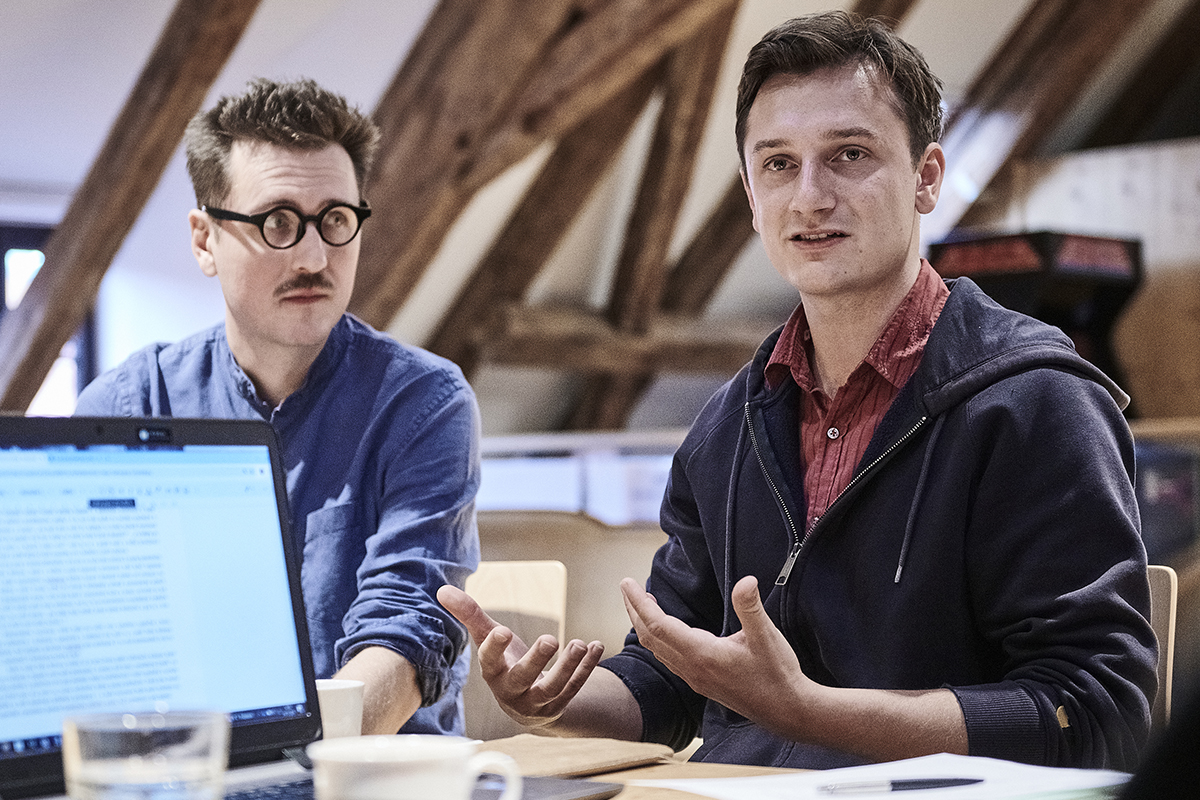
Petr Erbes and Boris Jedinák
Country: Czech Republic
National Theatre (Prague)
Biographies
Petr Erbes and Boris Jedinák rank among the leading creators of contemporary Czech theatre. Together, they have collaborated with many of the country’s foremost theatres and, from the 2020/2021 season, spent five years as core members of the directing and dramaturgy team at Theatre on the Balustrade.
Their work focuses on original documentary theatre, often drawing on real stories and events that engage with questions of national identity, current political affairs, and social myths. Their productions emphasize an open, often boundary-pushing form that blurs genre lines and actively involves the audience. A defining feature of their creative process is a research phase, frequently employing methods akin to oral history or ethnography.
In their work, they seek to give voice to people who are often unheard or overshadowed by those in positions of power. They believe that theatre is both a political space and a space of freedom and play.
Portfolio & Latest Theatre Performances :
Actual selected projects:
Privatization (premiere in 2025 in National Theatre in Prague) https://www.narodni-divadlo.cz/en/show/privatizace-QKZa14IHRO22x5jvBFe2DQ
God in Las Vegas (premiere in 2024 in Theater on the Balustrade) https://www.nazabradli.cz/en/repertoar/god-in-las-vegas/
Reality (premiere in 2024 in The Goose on a String Theatre) https://www.provazek.cz/en/inscenace/reality
Discoland (premiere in 2022 in Theater on the Balustrade) https://www.nazabradli.cz/en/repertoar/discoland_en/
Not actual selected projects:
Meeting of Plotters (premiere in 2021 in The Goose on a String Theatre) https://www.provazek.cz/en/inscenace/setkani-spiklencu
Conked by a Cudgel (premiere in 2020 in Theater on the Balustrade) https://www.nazabradli.cz/en/repertoar/conked-by-a-cudgel/
The Bartered Bride on the stages of the Provisional, Estates, and National Theaters from 1868 to 2018 (premiere in 2018 in Theater DISK) https://www.divadlodisk.cz/repertoar/prodana-nevesta-na-prknech-prozatimniho-stavovskeho-a-narodniho-divadla-v-letech-1868-az-2018-24
Children´s theatre:
Clay (premiere in 2023 in Theater Lampion) https://www.divadlolampion.cz/cz/divadlo/inscenace-hlina-229
Save Number 6! (premiere in 2021 in Theatre Minor) https://www.minor.cz/repertoar/zachrante-cislo-6
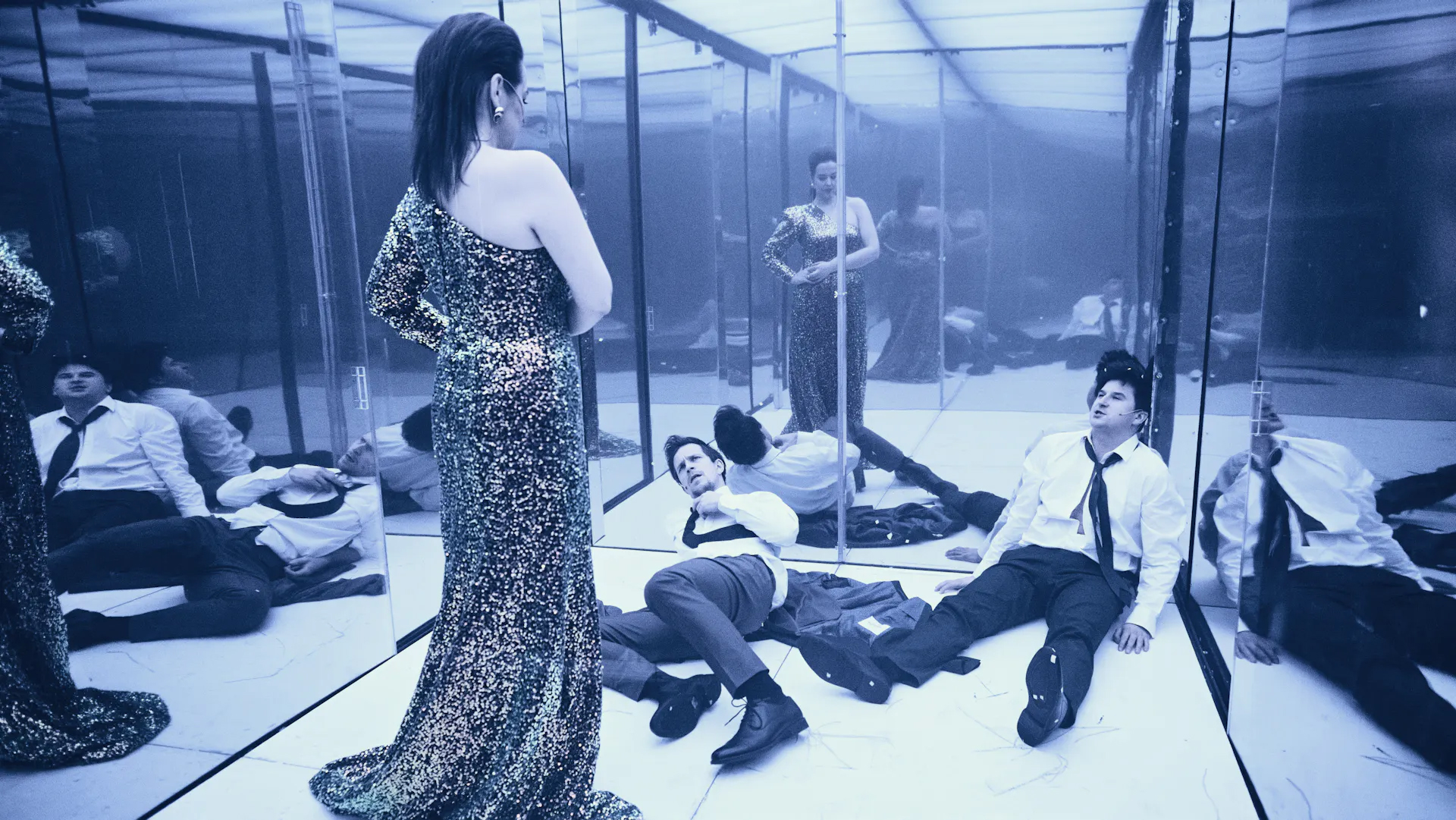
Privatization
Concept of the Performance:
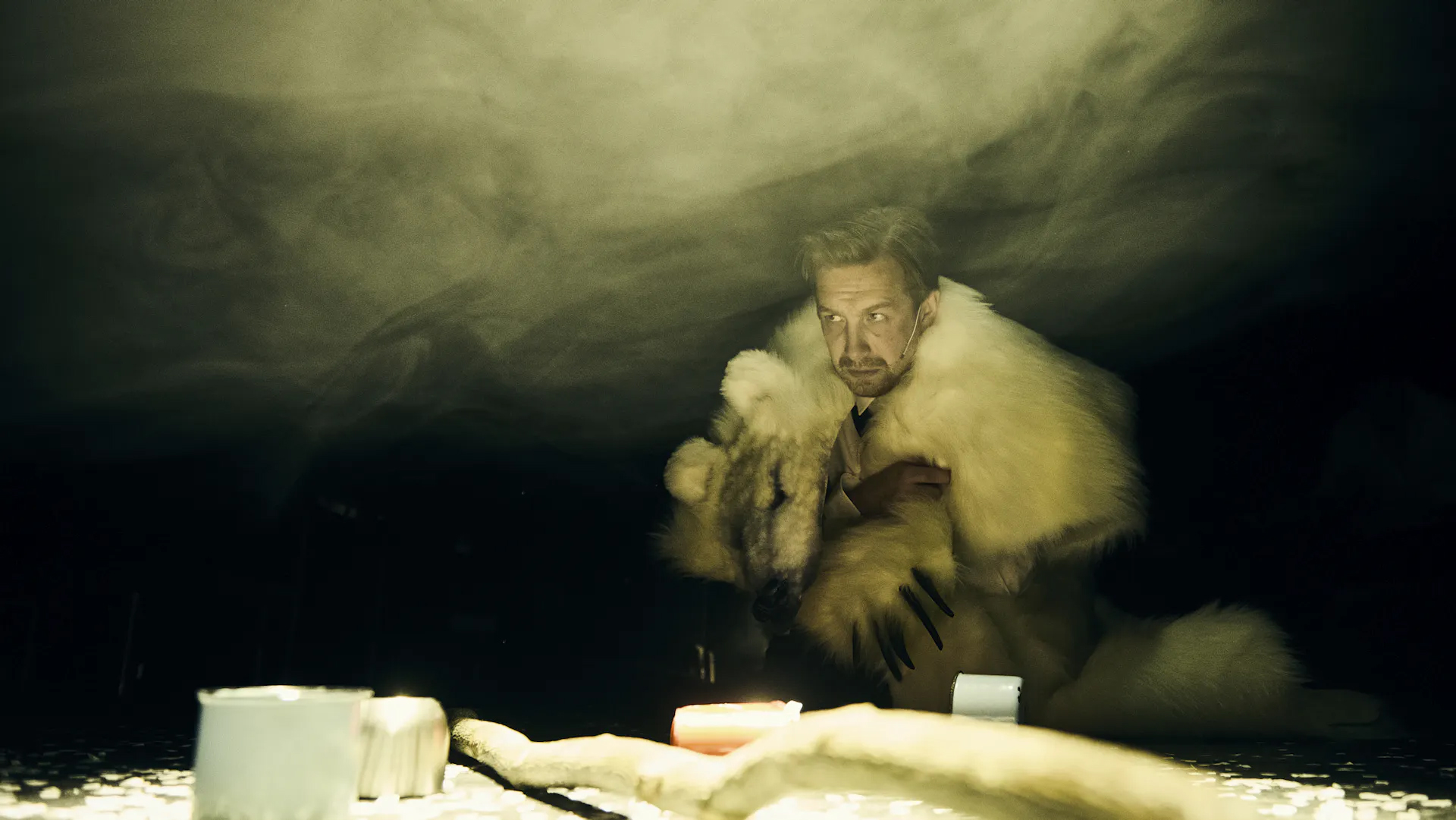
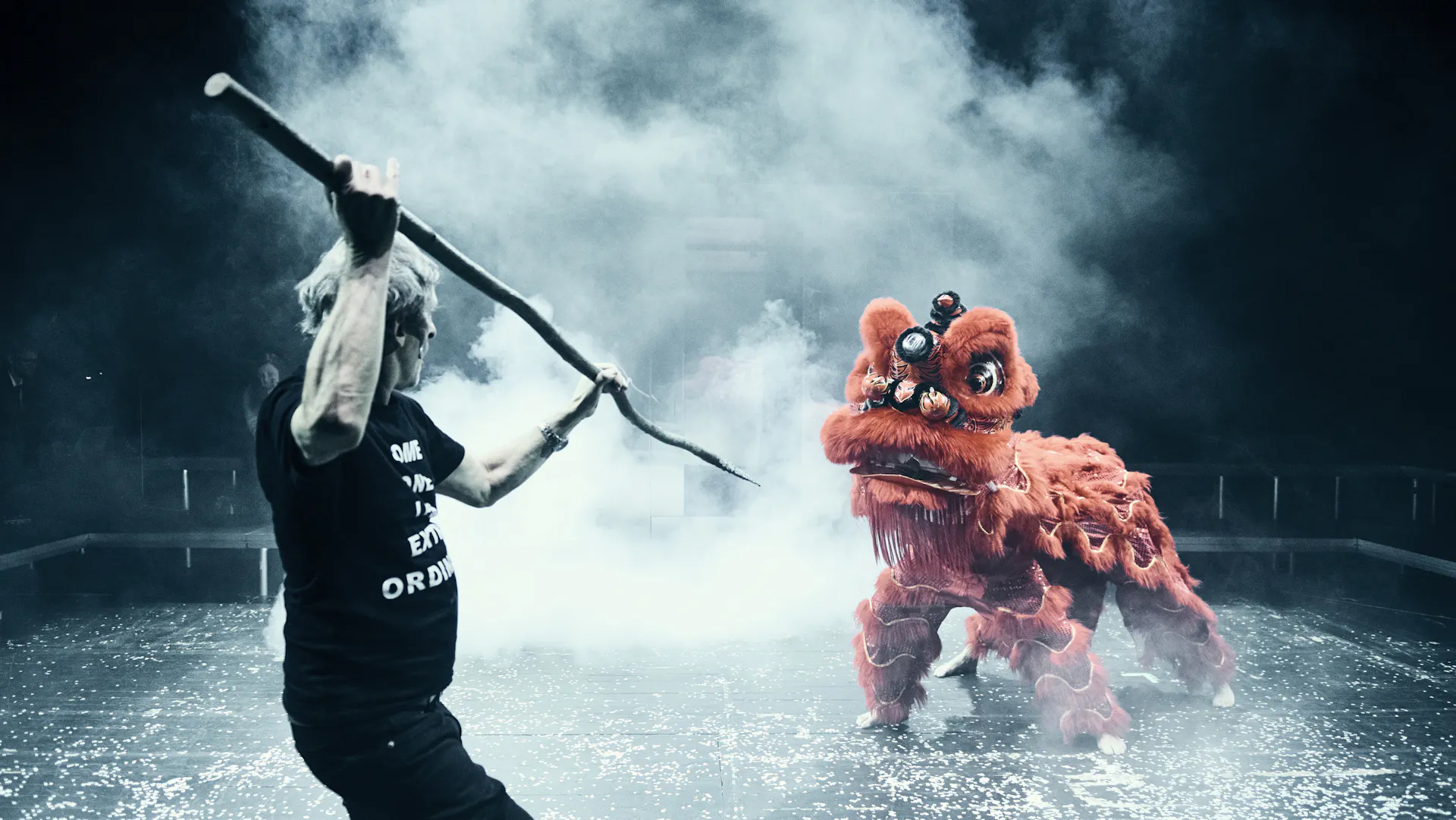
Privatization is an original documentary theatre production that examines the mechanisms and impact of power within society. It explores the legacy of Petr Kellner, once the wealthiest Czech, and poses the question of where the boundaries between the private and the public spheres lie.
Petr Kellner started his career during the voucher privatization in the early 1990s. Although he rarely spoke publicly, his influence on Czech society was enormous and remains controversial to this day.
The voucher privatization laid the foundations for today’s socioeconomic and political power structures in the Czech Republic and it also became a kind of modern myth about the reclaimed freedom after communism. On what basis did this myth arise? And are we still living it — all of us, and equally so?
The documentary project Privatization is based on interviews, memories, and testimonies of people affected by the activities of the richest Czech.
Artistic Statement
Petr Erbes: From the moment we started planning the production about Petr Kellner, many people told us we wouldn’t finish it. Sometimes they joked, other times they really thought that PPF could pressure the National Theatre or us to stop it. That didn’t happen, but it showed us how much fear powerful people can create—especially when you don’t know how they might use their influence. During the preparations for Privatization, we were surrounded by that fear very often.
Boris Jedinák: The performance was partly based on our interviews with people who, at some point in their lives, came into contact with Petr Kellner. The fear Petr Erbes talks about sometimes showed itself in the fact that some of the people we approached finally refused to talk to us. This later became one of the main themes of the play. In Privatization, we decided to show on stage our own situation (and that of most of the audience) – when, instead of answers to key questions about our economic and political development and about our recent history, there is only silence.
Trailer