Igralke
Country: Croatia
Biography
The name « Igralke » comes from the Slovenian word « igralke, » meaning « actresses. » In Croatian, it is a coined word that translates to “women playing. »
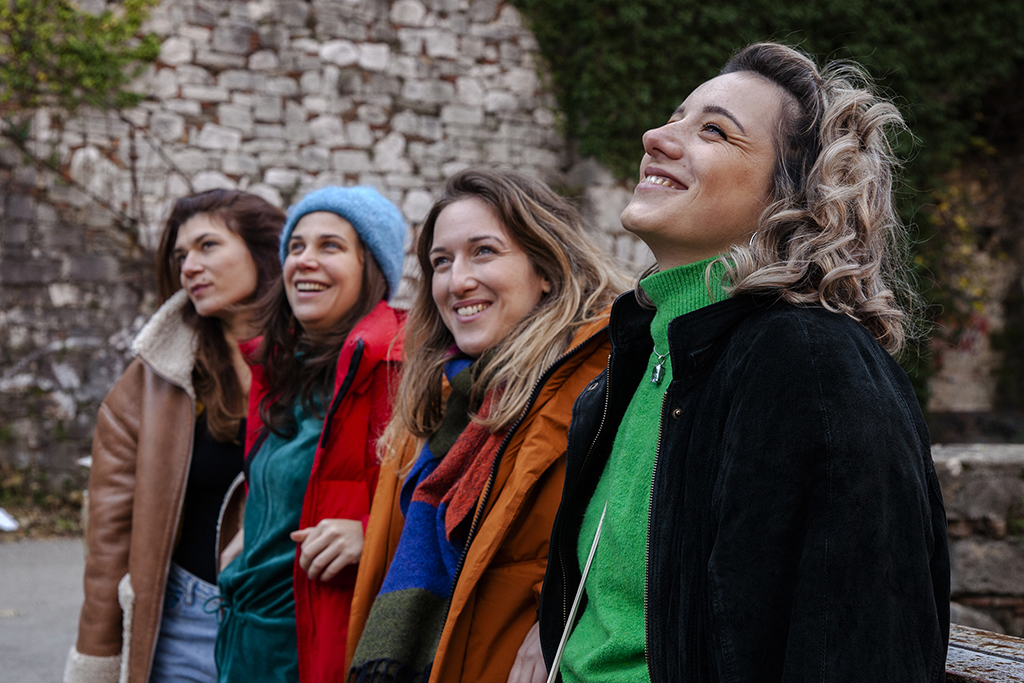
Kolektiv Igralke is an independent theatre company founded by four friends Anja Sabol, Ana Marija Brđanović, Vanda Velagić and Sendi Sotlar who studied Acting and Media together at the Academy of Applied Arts in Rijeka. In 2025 Klara Kovačić, a student from the same Academy, joins the collective.
Before that, the actresses completed degrees in social anthropology and cultural management, philosophy, comparative literature and Russian studies, and speech therapy which are embedded in their author’s and research work.
Since 2019, they have been developing their own projects as authors, performers, and producers. They create devised theatre inspired by personally and politically urgent issues through a feminist lens. With each new performance, together with their collaborators, Igralke rethink thier working methodology and explore the forms of devised and documentary theatre, in which ethics and aesthetics are inseparable. Sometimes they just experiment, play, and allow new forms and processes to surprise them. Their home, the homebase of their lives, creations, and storytelling, is the city of Rijeka in Croatia.
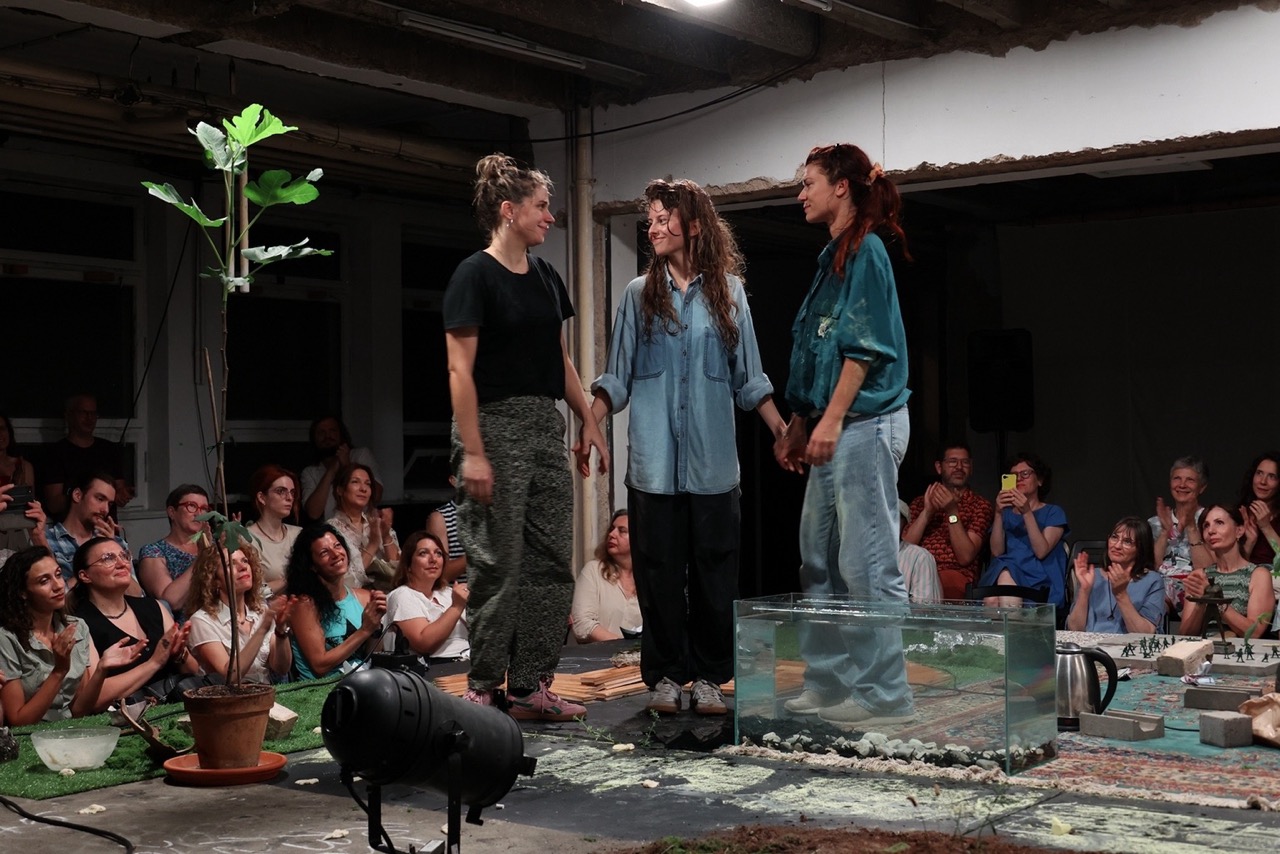
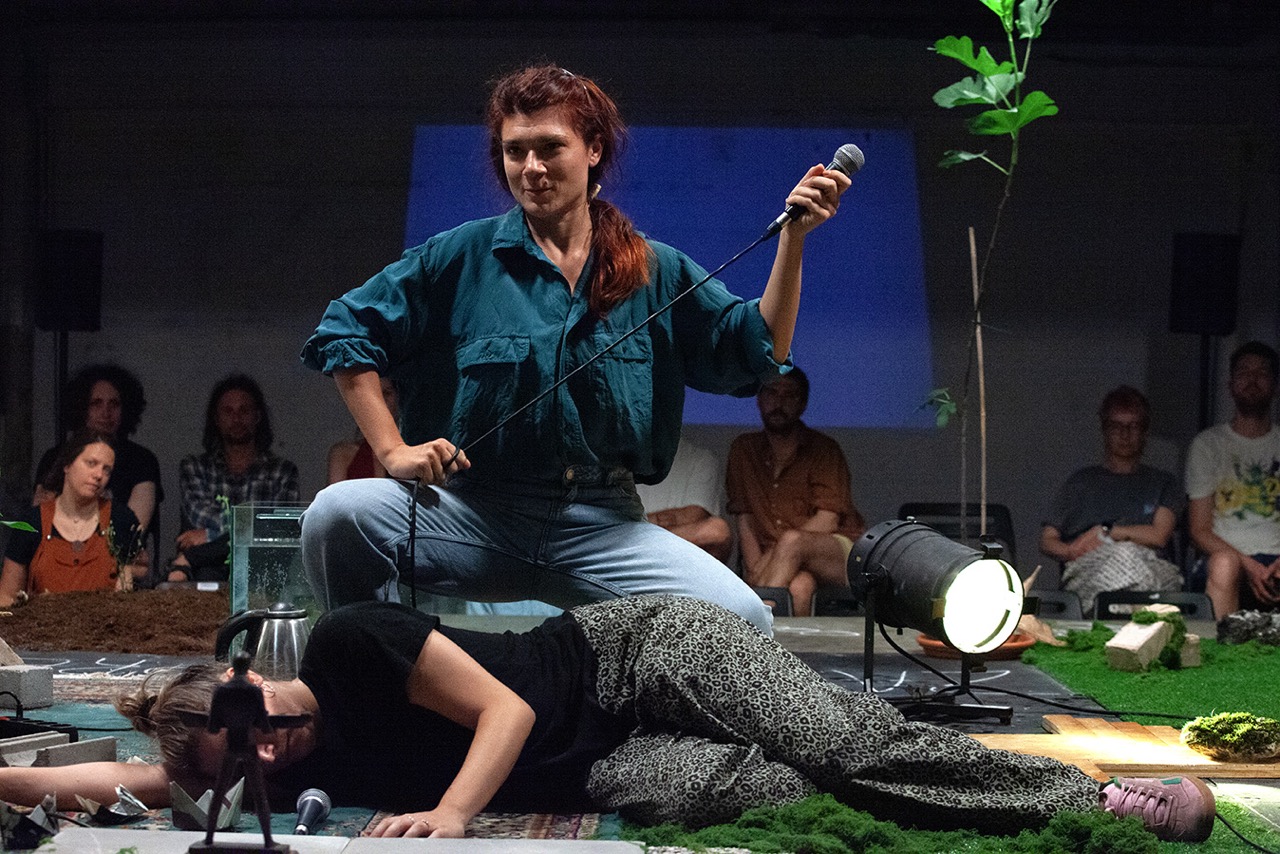
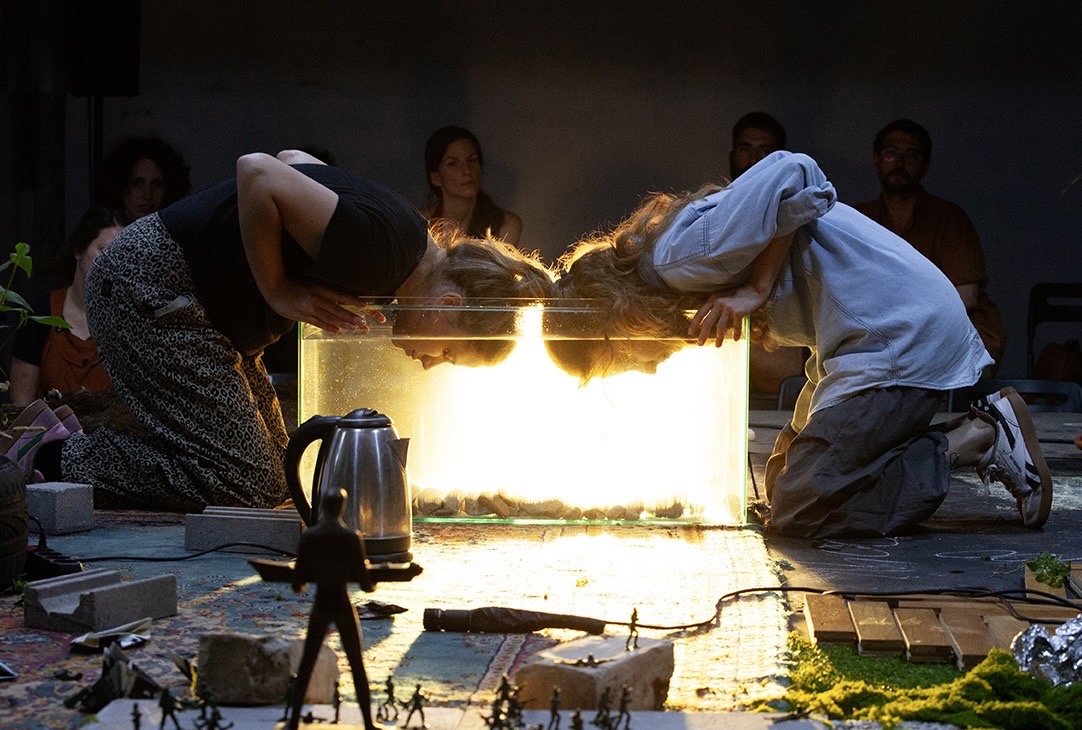
The Knot
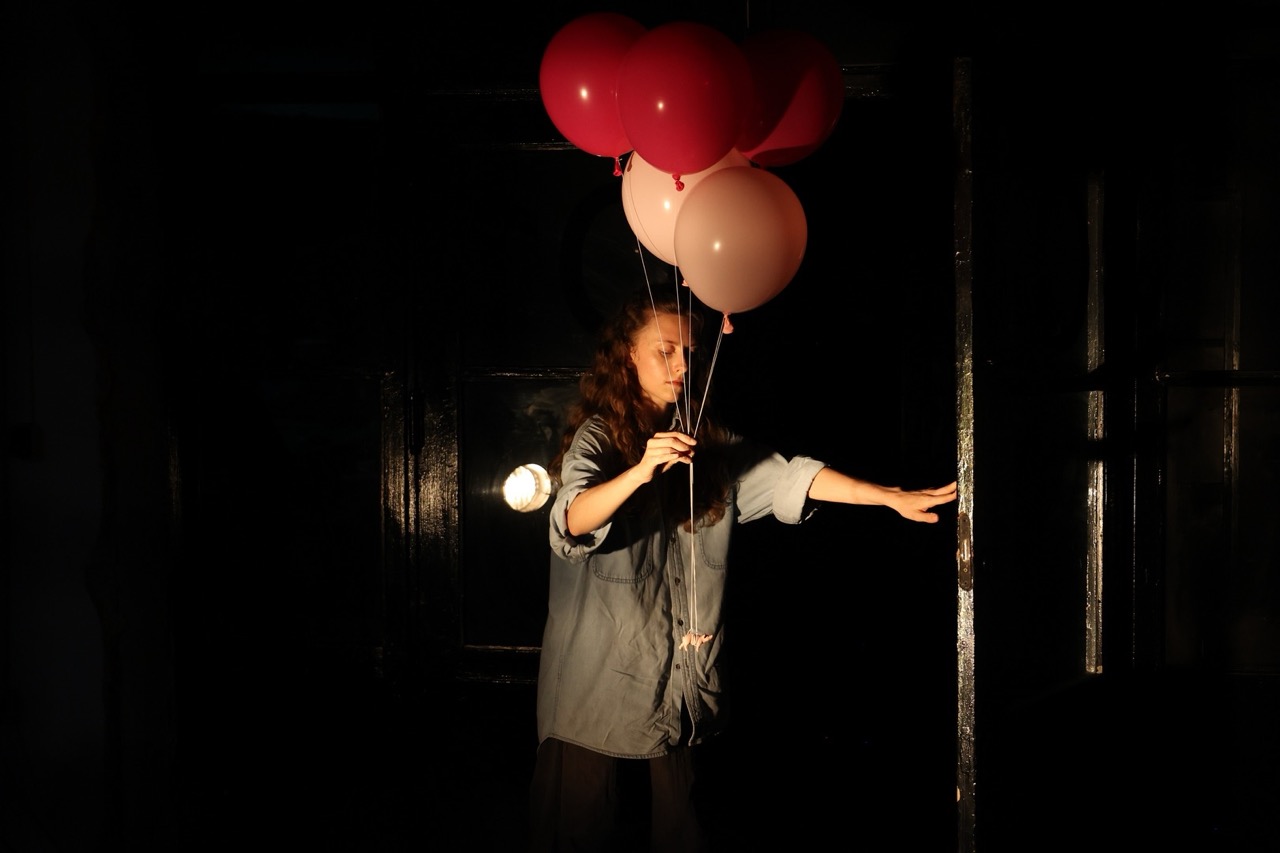
Something is tightening.
We can all feel it. Yet we continue pulling, each in our own direction, for as long as we can.
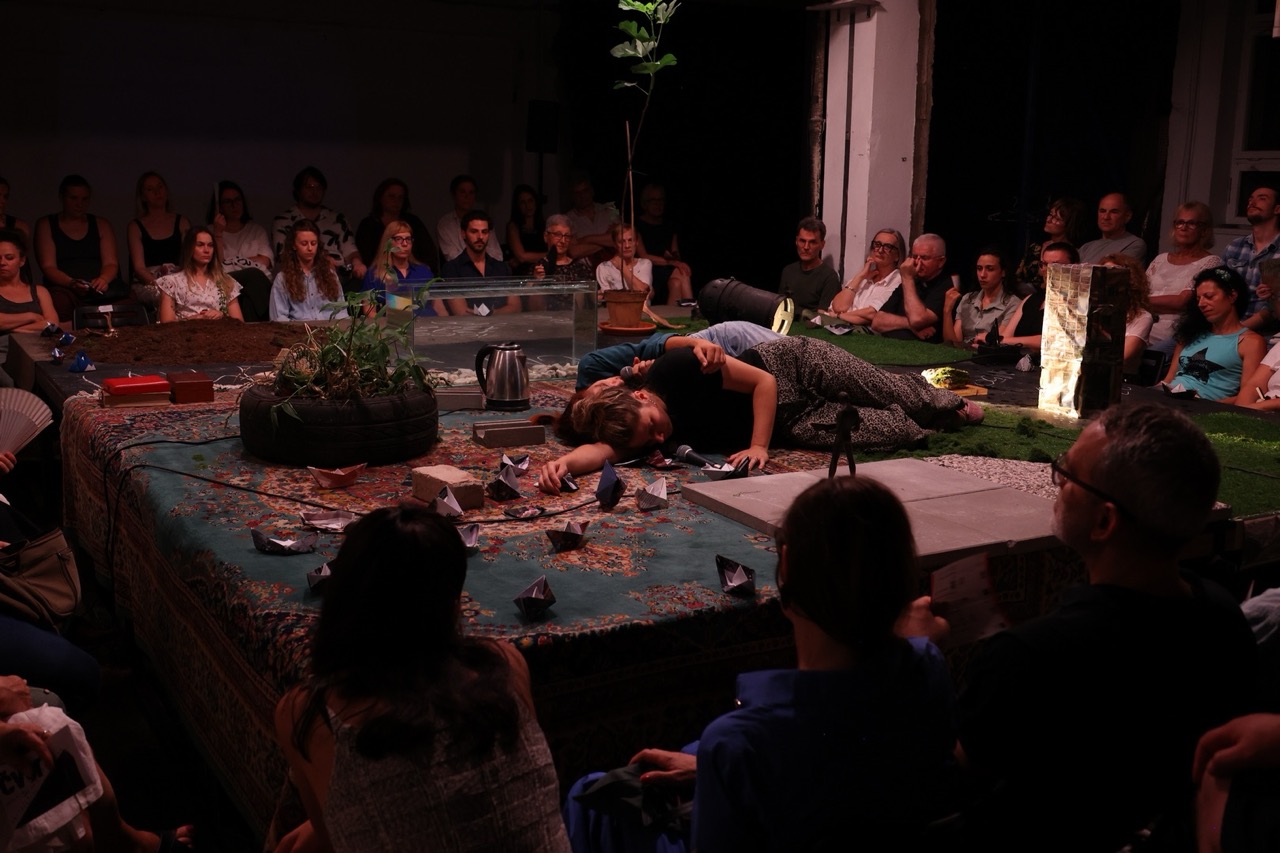
The Knot begins with this feeling of tension: an unease that emerges when preparing for war is increasingly presented as the only reasonable way of caring for the future. Across Europe, the language of security, defence, readiness and resilience is becoming ever more present, while states increase military budgets and societies gradually reorganise around the possibility—or inevitability—of war.
The performance traces the ways in which large-scale political violence enters everyday life. Militarisation is approached not only as a question of weapons and budgets, but as a process through which fear, violence and the loss of an imaginable future become embedded in our bodies, relationships and surroundings.
Set against the layered history of Rijeka—a city shaped by labour, industry, war and failed promises—The Knot asks what it means when the future is once again imagined through military production. And what, if anything, might still be built from the ruins of these promises?