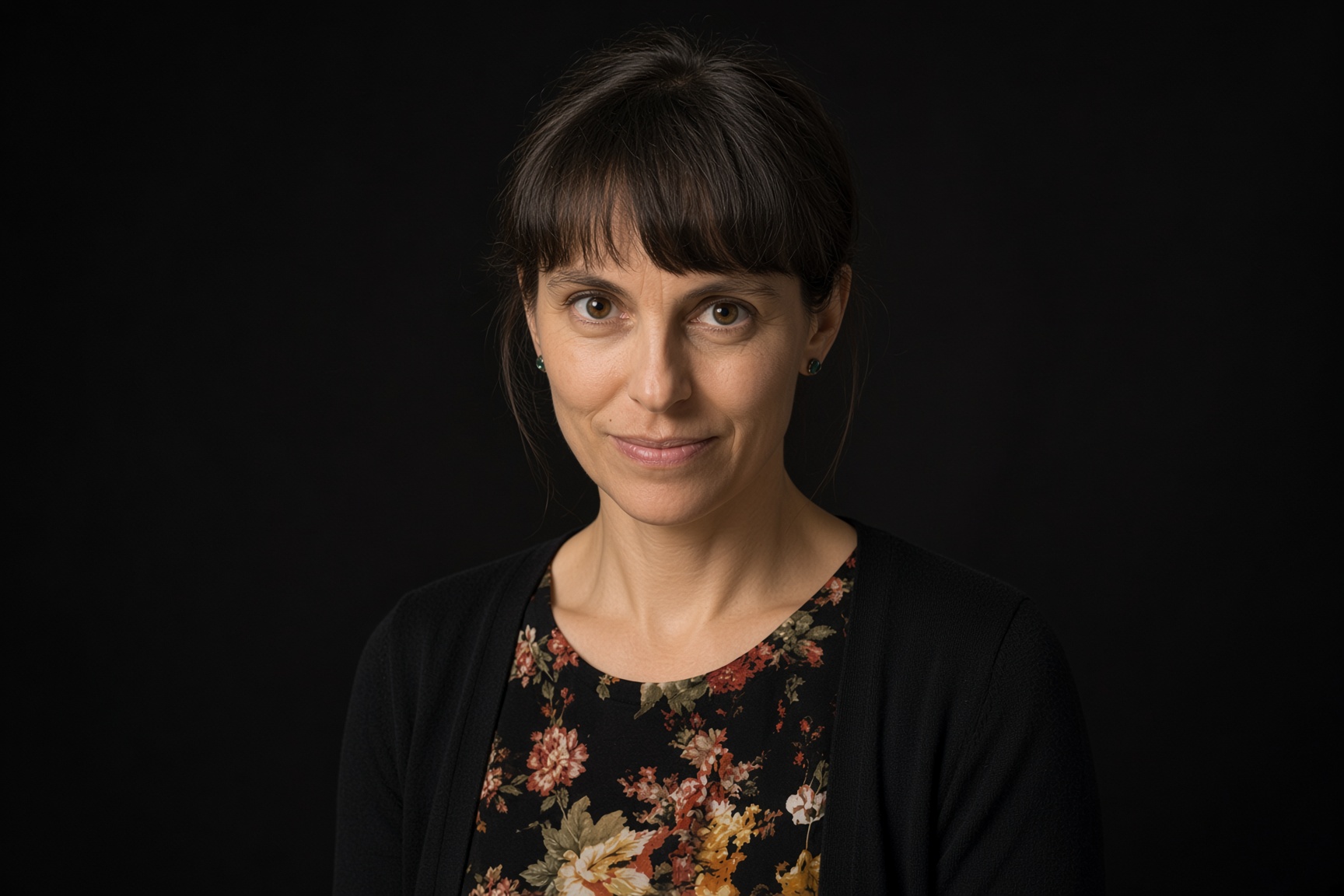
Joana Craveiro
Country: Portugal
Teatro Do Vestido
Biography
Joana Craveiro is a performer, playwright, anthropologist, teacher, filmmaker and artistic director of Teatro do Vestido, the theatre company she co-founded in 2001, in Portugal. She has created and directed over 60 performances. Her creative practice engages with political memory, archives, oral history and ethnographic fieldwork and people often call it documentary theatre. She rather thinks of it as poetic documentary and sometimes essayistic performances. She has developed an original approach to the lecture-performance format through her monumental six-hour solo A living museum of small, forgotten and unwanted memories, which she has been touring since 2014.
In 2021, she directed the documentary film Women were there too, for which she received the Olhares do Mediterrâneo Women’s Film Júri Award. She was a Fulbright Research Scholar at Rutgers University, USA, with her project “Intimacies with the land”, engaging with indigenous practices and methodologies, decolonizing knowledge and new mappings of cities based on a deeper understanding of history and its transmission.
Joana Craveiro is the coordinator of the Theatre Degree at ESAD.CR, in Caldas da Rainha, Portugal.
She is part of the European playwrighting network Fabula Mundi, http://www.fabulamundi.eu/en/joana-craveiro/.
Her writing has been published in playwrighting volumes, academic volumes that intertwine art and academia, and magazines. The script for MONTAGE will be published this year in Portugal by Artistas Unidos.
Montage
A film to be.
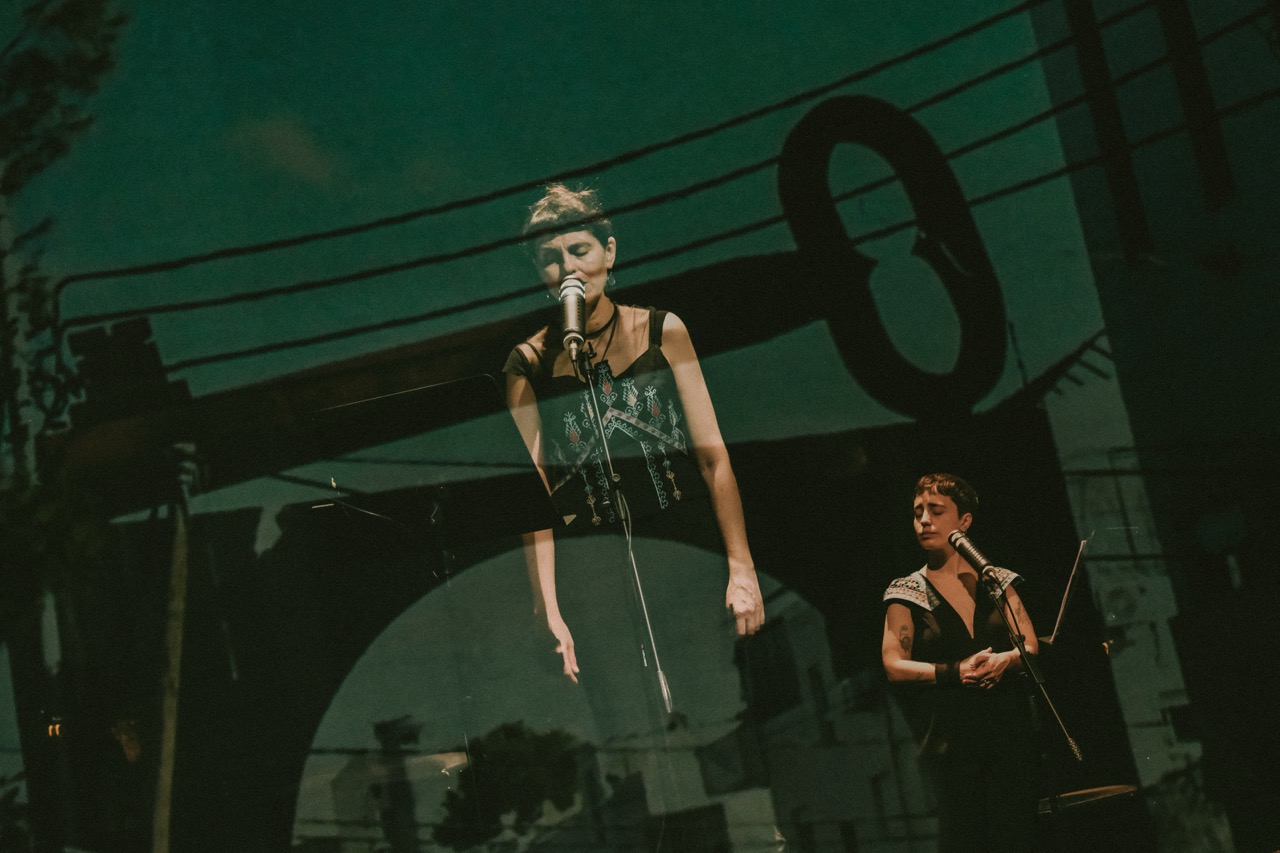
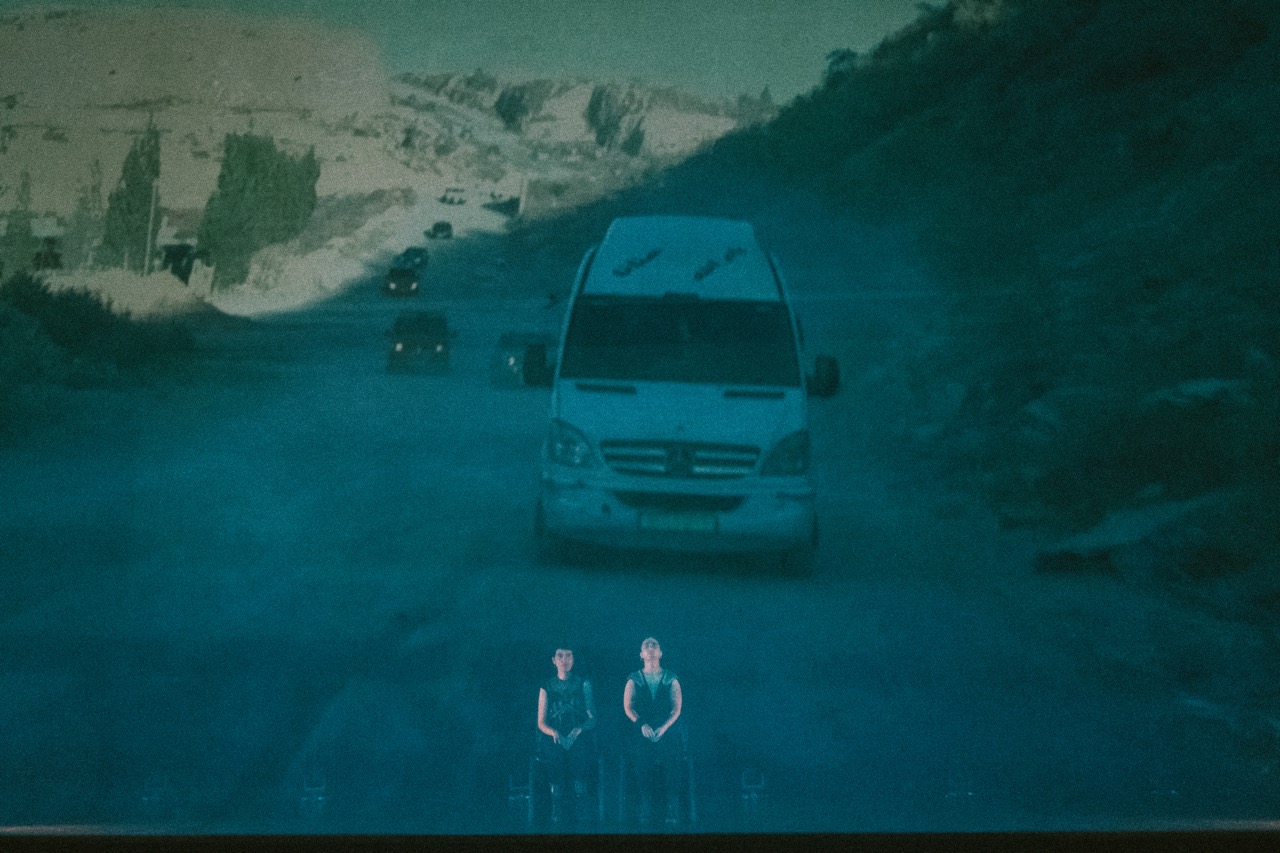
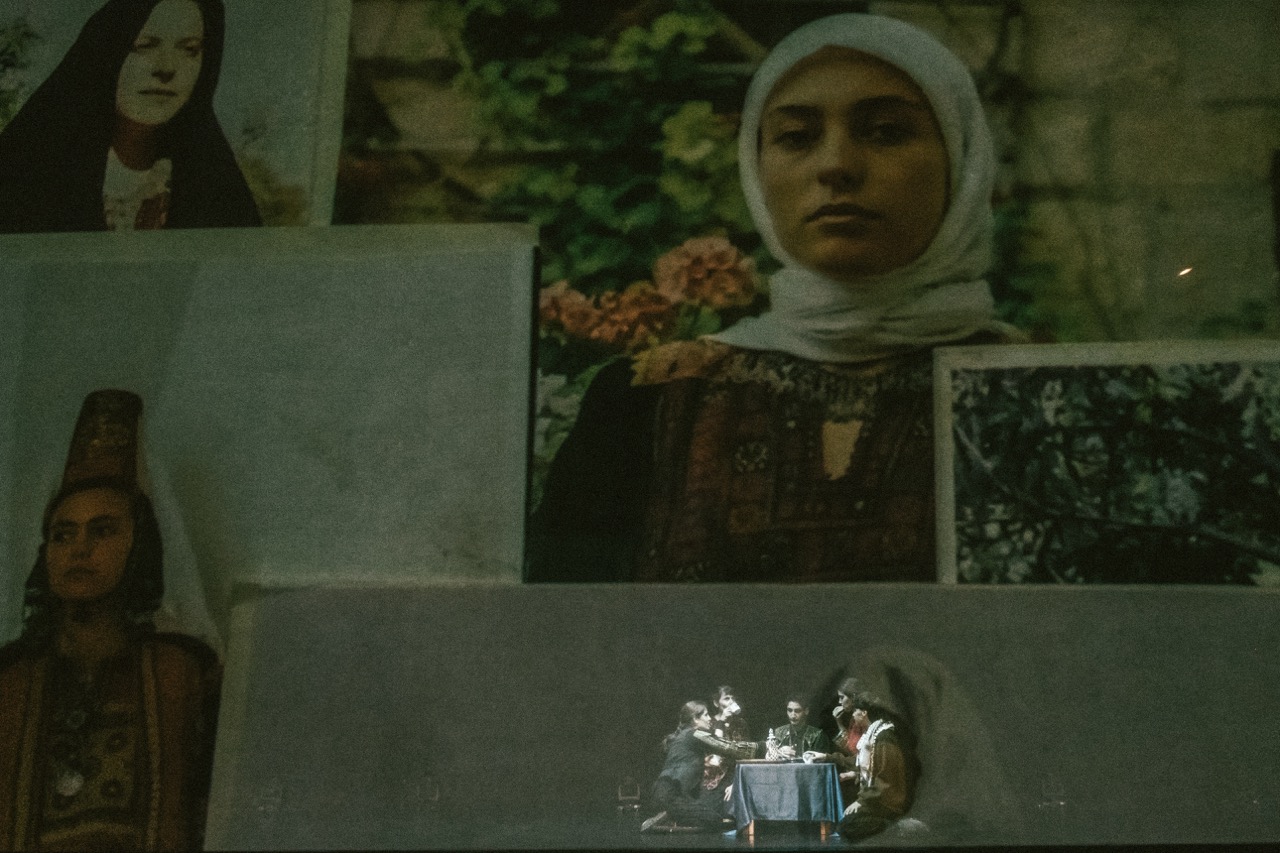
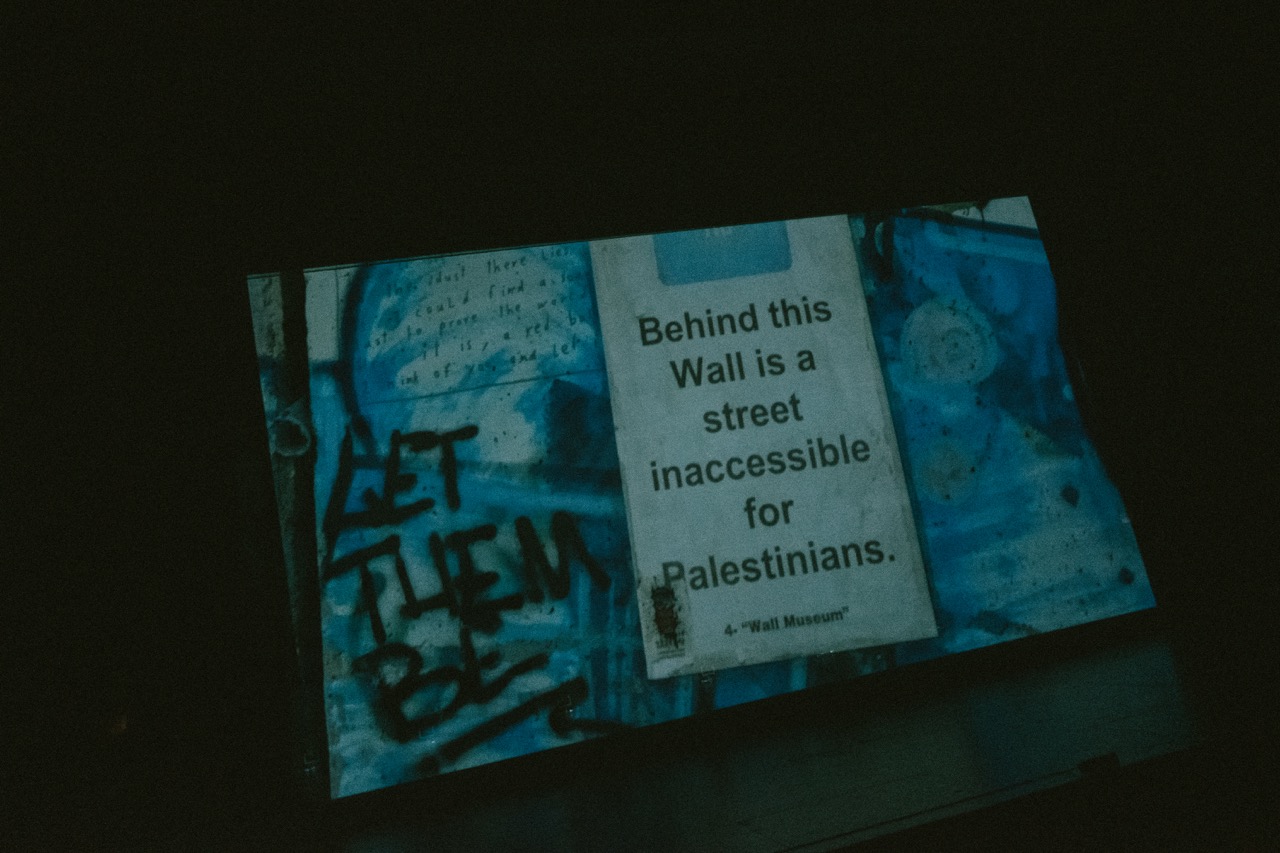
A hybrid performance that combines filmed footage from 3 journeys to Palestine with archives and poetic landscapes filmed live and video live-mixed on stage, to a sound of a voice-over in Portuguese (or English) and Arabic also being narrated live. These voices convey the stories heard in Palestine, protecting thereby the original narrators whose voices and images we don’t get to hear or see.
Images of landscapes, roads, checkpoints, houses, refugee camps, villages and cities are edited with precision accompanying the voice-over narration, creating multiple layers. Palestine is at once simple and complicated.
The music score is played live. The audience discovers as the performance unfolds, that there are performers and technicians on stage. The film is alive, is being created there and then.
This project, filmed and workshopped since 2023, portrays daily life in the occupied West Bank.
Palestinians are not depicted as victims but rather as human beings trying to live a life and hold on to their land amidst extremely hard circumstances.
The filmmaker, Joana Craveiro, a foreigner, reflects upon her positionality and role, as well as on the limits of interpretation and representation.
The presence of Palestinian performance artist Tarab on stage narrating the voices heard renders the filmmaker accountable for her responsibility to use the footage to tell the stories she was entrusted with.
The performance deals with hope and hopelessness and with the loss for words.
“When you run out of words, what will you write?”, Tarab asks in the prologue.
This performance is the answer to that question.
Artistic Statement – artist’s words :
In 2023, about to travel to Palestine for the first time (to the West Bank), as part of a so-called ‘political tour’ with another 16 comrades, I decided to bring my camera. It was not clear what for. I am a performance maker, a playwright and director. Making a performance would almost definitely follow this trip, I thought. But why the camera? Record, document, write about it, I thought. I would write a journal every night, go through the images, prepare for the next day. And I would worry about the artistic outcome later. So I did. When I met M., on the first day, he asked, “Are you going to be filming all the time? Before you decide to use my image, please ask me.” He reminded me of the power and dangers of a camera and the need for the protection of the narrators. I decided never to film directly the people telling stories, or, if I did, it would not be part of the final editing of whatever artistic object I was conceiving.
M. also gave me the second prompt, “Open your eyes. Everything is political.” And so I did. This state of constant alertness is exhausting and overwhelming, but it became part of the project. Later, when I read Aja Monet’s introduction to Mohammed El-Kurd’s Rifqa, it became even clearer that this was a never-going-back road: “You cannot unsee once you have seen it.”
I cannot.
Structural occupation of Palestine and the everyday life of Palestinians under it are something one cannot unsee.
This process of unseeing and also this archive of filmed footage haunted me. The responsibility of telling what I SAW haunted me. I put together a rough in-progress performance called Unsee, which has toured extensively in Portugal since 2023.
Another trip to Palestine followed in 2024 and yet another in February 2026.
And always filming, writing diaries, taking notes.
And discussing with Tarab, whom I met in Palestine in 2023, a future performance we would make together.
Finally, the opportunity to create MONTAGE presented itself.
MONTAGE is the performance I had envisioned in those first days in Palestine, when I had no lexicon to even understand a reality as charged as that, where I had to learn everything from scratch – in fact, I had to unlearn a lot. The vastness of the archive of images – the result of a camera constantly filming for fear of missing anything out and a certain archive fever – posed me questions of accountability, ethical documentary practices, protection of the narrators; doubts about how, whom and what to choose, how to edit, where to start.
The collaborative process of MONTAGE – through an in-depth artistic residency in CITEMOR (2025) and in 2026 in CCB, co-producer of this project – has allowed me to find the storyline, the dramaturgy, the voices. The possible editing/montage, which also became one of the key questions the performance raises.
MONTAGE is a challenging artistic object, an interdisciplinary performance, where a film happens live, and the audience is invited into the process, sharing of the filmmaker’s impressions, doubts, anguishes, hopelessness, and difficulty to move on. But the film is not about her. It remains from beginning to end a project about Palestine and its underrepresented stories and voices, its places being erased, its cultural resistance and the hope for liberation.
Bearing in mind M.’s warning in 2023, “Don’t think you are going to speak for the Palestinians”, and Tarab’s rebuke, “Don’t romanticize Palestine”, MONTAGE is a project about witnessing and the responsibility that follows.